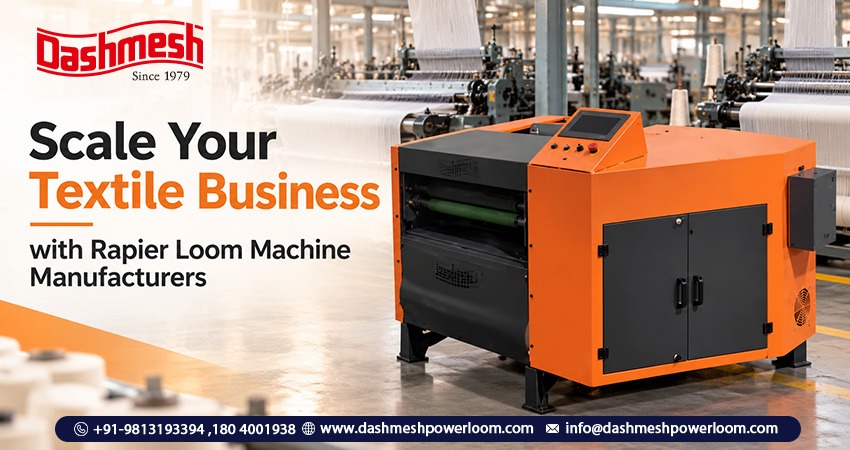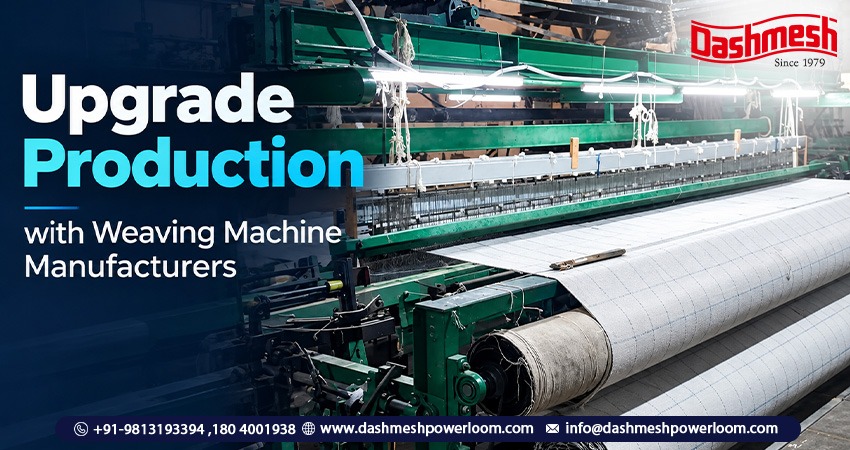



India’s textile industry grows on versatility and tradition, and rapier looms play a crucial role in shaping its fabric production. It is known for its efficiency, precision, and ability to handle different yarns like delicate silks or sturdy synthetics. Rapier looms are widely used across key weaving hubs like Surat, Bhilwara, and Varanasi. These looms power the creation of everything from Banarasi sarees to high performance technical textiles. They demand investment and skilled operation,n and some of their advantages are that they have a multi colour weft insertion, which reduces yarn waste and adaptability.
In this blog, we will discuss what a rapier loom actually is and its uses and also discuss how they are contributing to textile industry.
Rapier looms are advanced weaving machines that use a flexible or rigid rapier to insert the weft yarn across the warp yarns to create fabric, which is known for its precision, versatility and efficiency. They are widely used in the textile industry to produce a variety of fabrics to make lightweight dress materials or heavy industrial textiles.
1. Single Rapier Machines
The other load movement is the return trip. In addition, the rapier must be heavy and rigid, which makes these machines less desirable.
2. Double Rapier Machines
1. Rigid Double Rapier Machines
2. Flexible Double Rapier Machines:
How They Work: These machines incorporate flexible rapiers in the form of strips that can be wound onto a drum. Instead of rigid bars, these machines use flexible bands.
Advantages: Their biggest advantage is that they have an easier time fitting in restricted areas and save space. These machines improve handling of yarn as they capture it at both ends.
Popularity: Flexible rapiers are preferred over rigid ones for their versatility and space-saving properties.
To make sure that the rapier loom machines are of good quality, choose them from a reliable and trusted source.
If you are looking for a Rapier Loom Machine Manufacturer, Dashmesh Jacquard is one of the leading and registered manufacturers and suppliers eligible under T.U.F.S. for weaving and allied machinery like looms, jacquards and warping and winding machines. We have been serving the nation since 1979, having an exceptional record of success and an excellent textile engineering industry share.
Copyright © 2026 Dashmesh Jacquard And Powerloom Pvt. Ltd. All Rights Reserved | Developed By: Intellistall Pvt. Ltd.