How Are Rapier Loom Machine Manufacturers Enhancing Fabric Quality?
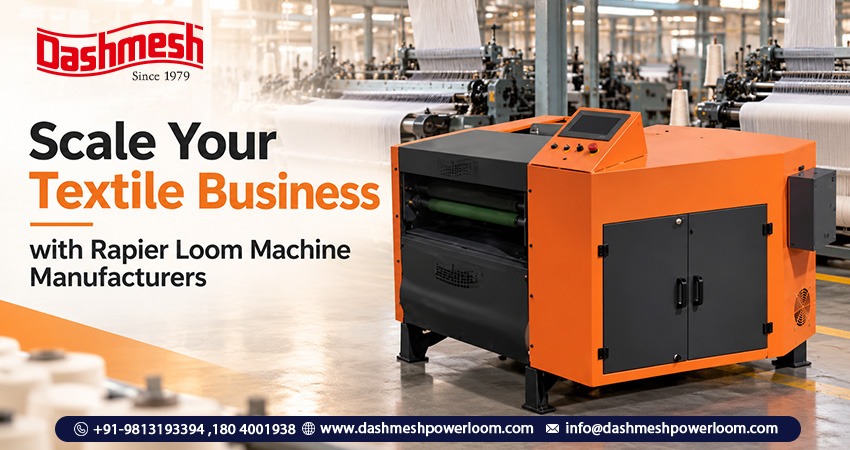
Massive transformation of textile industry has been experienced in the last few decades. The Rapier Loom Machine is one of the innovations that have risen among the many innovations that have resulted to the excellence in weaving performance and precision. Indian Rapier Loom Machine manufacturers are not only able to meet the international standards but also establish new standards in the textile technology today. Their machines are re-defining the manner in which fabrics are woven - with the same texture, faster production rate and good fabric strength.
The Rapier Loom Machines and its use in modern weaving
The rapier loom machines are operated by having a flexible/rigid rapier by which the weft yarn is passage through the warp shed. This has a tight control and precision when weaving leading to a perfect finish. New machines have electronic control, automatic color selection and live tension adjustment system. These characteristics assist in creating elaborate designs and at the same time ensuring uniformity all over the fabric surface.
| Key Feature | Benefit |
| Fast speed of operation | Increases efficiency of production. |
| Advanced accurateness in weaving | Guarantees steadiness of clothes. |
| Handling versatile yarns | Handles different textile materials. |
| Minimum maintenance design | Minimizes the down times and charges. |
With the increasing demand of quality textile, manufactures keep on upgrading their machines, so that weavers can produce remarkable output with little effort.
The reason why Rapier Loom machine manufacturers are transforming the quality of fabrics
The new generation of Rapier Loom Machine Manufacturers is concerned with the innovation and precision engineering. They use a blend of their innovation with decades of experience in the industry.
And this is the way they are making the fabrics better in general:
- Electronic Control Systems: Make it possible to make changes in tension, speed and the pattern automatically.
- Adjustable Weaving Effects: Weavers should be able to create their own weaving effects and styles.
- Noise Reduction Mechanisms: Improve machine working without creating noise in the workplace.
Indian machines are now globally competitive with such improvements being valued by textile mills as long lasting and reliable.
Advantages of the Selection of the Modern Rapier Loom Machines
Moving to modern rapier loom machine has several benefits besides increasing output in production.
Major Benefits Include:
Excellent quality of fabrics - Makes thick, non-slippery clothes with smooth surfaces.
Enhanced Productivity - It takes less downtime by enhancing productivity.
Energy Efficiency - Advanced systems use less power and are also fast.
User-Friendly Design - Easy to use and maintain, requires minimum training.
Economic Procedures - Economical on a long term basis since it is durable and requires minimal maintenance.
The Way Indian Manufacturers are competing on the international front
Rapier Loom Machines have become one of the hot spots in India, thanks to the developments in mechanical design and digital automation and the quality of exports. Machines that are competing European brands in precision are being offered at considerably lower prices by Indian companies.
They have a high engineering background, automation and sensor based control which makes them a favorite among the textile manufacturers of Asia, Africa and the Middle East.
Conclusion
The experience of
Rapier Loom Machine Manufacturers can be interpreted as the means of innovation that can bring an industry to the next level. Since ancient times of weaving systems up to modern completely automated machines, these machines have introduced accuracy, durability and variety into the textile manufacturing industry.
Due to the increased demand of the global textile market in higher quality and customization, such companies as
Dashmesh Jacquard still provide their customers with excellence by offering them the best rapier loom technologies.
Frequently Asked Questions
Ans: It is applied in the weaving industry to create quality and precise fabrics of high quality.
Ans:It produces quicker; it weaves easily and accommodates other types of yarns.
Ans: Yes, the current models are made to save energy yet not to be less active.
Ans: They are very real with cotton and wool and artificial yarns.